Shower Filter for Hair Loss & Damaged Hair: What the Evidence Says (2026)
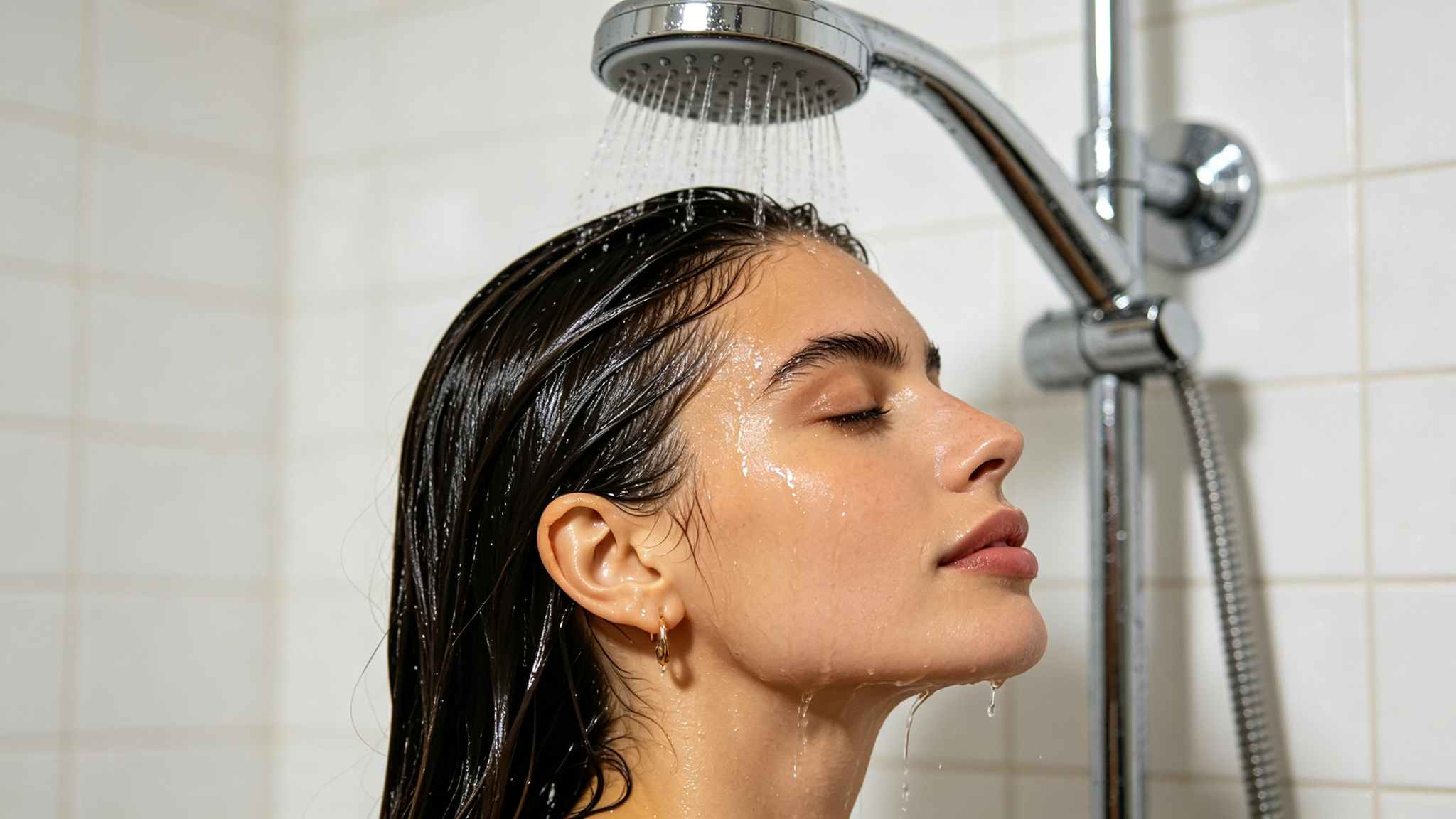
If you’ve lost more hair than usual in the shower drain, you’ve probably searched “shower filter for hair loss” and landed on pages that promise a filtered shower head will stop your hair from falling out.
Let’s start with the honest answer: a shower filter will not stop hair loss. Not for androgenetic alopecia, not for telogen effluvium, not for pattern baldness. Those are medical conditions, and shower filters don’t treat them.
What a shower filter can do is address two things that affect hair texture and manageability — chlorine exposure and hard-water minerals — which may make your hair feel healthier, even if it doesn’t change how much grows.
What Actually Causes Hair Loss?
Before you spend money on a shower filter, it’s worth understanding what’s actually happening to your hair. The common causes:
- Androgenetic alopecia (pattern hair loss) — genetic, hormonal, affects follicles over years. No shower filter addresses this.
- Telogen effluvium — a temporary shedding after stress, illness, or medication changes. Resolves on its own.
- Thyroid or nutritional issues — see a doctor.
- Mechanical damage — heat styling, tight ponytails, rough brushing.
- Chemical damage — chlorine from showers and pools, product buildup.
A shower filter addresses the last item. It doesn’t address the first four.
If your hair is genuinely thinning (part widening, receding hairline, visible scalp), this is a dermatology question, not a plumbing question. A shower filter won’t hurt, but it won’t fix it either.
What the Research Actually Shows
Here’s where it gets interesting. The research is contradictory — which is exactly why you see both sides making claims online.
The Studies That Suggest Hard Water Matters
- Luqman et al., International Journal of Trichology, 2018 (n=70): Hair treated with hard water showed decreased tensile strength — hair became measurably easier to break.
- Electron microscopy study of swimmers: 61% of swimmers showed complete cuticle loss after chlorine exposure, with X-ray analysis detecting chlorine penetration into the cortex.
The Studies That Say It Doesn’t Matter
- Srinivasan et al., International Journal of Trichology, 2010: No significant difference in tensile strength or elasticity between hair washed in hard water versus distilled water over 30 days.
What This Means
The research is genuinely mixed. Hard water and chlorine can make hair feel drier and more brittle, but the studies disagree on whether they cause measurable structural damage.
What’s clearer: chlorine binds to hair keratin and strips natural oils, which is established chemistry. That’s why hair feels stripped after a chlorinated shower.
What a Shower Filter Actually Does for Hair
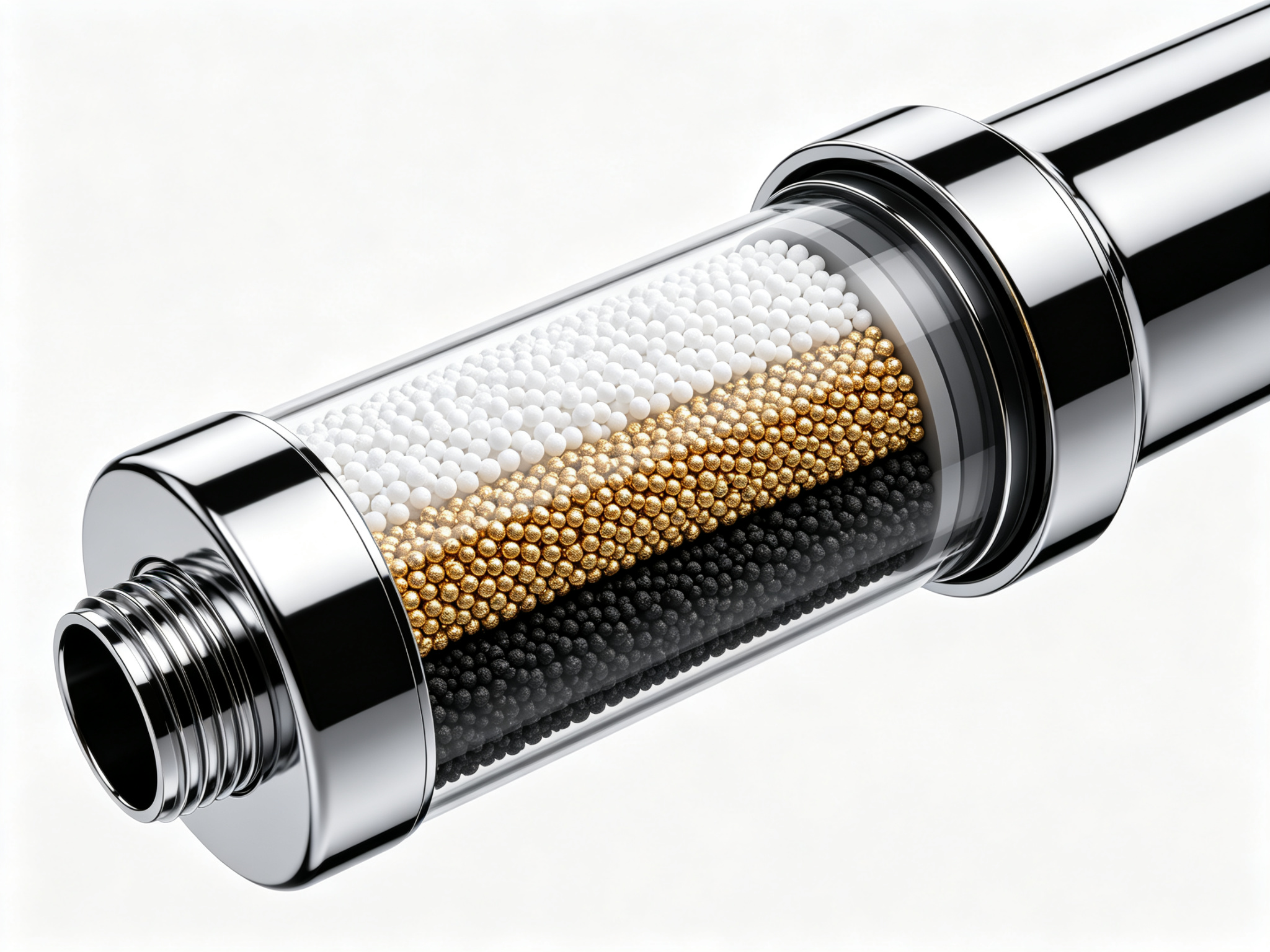
Here’s what a shower filter can do — not with loss, but with how your hair feels and behaves:
- Chlorine reduction. Hot shower water vaporizes chlorine, which touches your scalp and hair for 10–15 minutes a day. Chlorine strips oils from the hair cuticle, making hair feel dry, brittle, and harder to manage. A KDF-55 filter reduces this.
- Sediment capture. Hard-water pipes carry fine mineral particles that can build up on the scalp and make hair feel dull. A filtered shower head catches some of this.
- Hard-water minerals — limited effect. Calcium and magnesium stay in the water (a shower filter doesn’t soften it). But some people notice that their hair feels less “waxy” after switching to a filtered shower, possibly because the chlorine reduction changes how the minerals interact with their hair.
What you can reasonably expect: your hair may feel softer, less tangled, and easier to manage after a few weeks of using a chlorine-reducing shower filter. What you can’t reasonably expect: fewer hairs in the drain, or new growth.
What the Dermatologists Say
Dr. Christine Shaver, board-certified dermatologist at Bernstein Medical Center, notes that filtered water keeps hair’s pH balance slightly acidic, which prevents cuticle damage caused by the alkalinity in hard water. Maintaining this pH balance is particularly important for people already experiencing hair thinning or breakage.
But here’s the honest part: most dermatologists don’t prescribe a shower filter for hair loss. Hard water isn’t a recognized cause of true alopecia. Plenty of dermatologists do suggest filters as an adjunct once breakage, dryness, and dandruff are ruled in — but it’s a supporting measure, not a treatment.
Best Shower Filter for Hair and Skin
If you’ve decided that chlorine irritation is your likely issue, look for:
- KDF-55 media — reduces free chlorine through redox.
- Vitamin C option — if your water uses chloramine, vitamin C ascorbic acid handles both chlorine and chloramine on contact.
- NSF/ANSI 177 certification — the standard for shower water chlorine reduction.
- Tool-free install and replaceable cartridges — you’ll be changing the filter every 6 to 12 months.
Zooshen pick: Our filtered showerhead line uses KDF-55, is certified to NSF/ANSI 177, and has replaceable cartridges. The vitamin C line is the right pick if your water report says chloramine.
What “Best Shower Filter for Hair Loss” Reddit Threads Usually Say
If you’ve read “best shower filter for hair loss reddit” or “best shower filter for hair reddit,” the consistent advice is:
- See a dermatologist first. Get a diagnosis before you spend on plumbing.
- Take photos in good lighting. Hair looks thinner in photos than it feels in the shower.
- A shower filter may improve hair texture, not hair loss.
- Don’t expect results in a week. If chlorine is the issue, it may take 4–6 weeks to notice a difference.
- If you have hard water, remember: a shower filter doesn’t soften it. A water softener does.
Is It Worth Trying a Shower Filter Anyway?
Yes — if you have confirmed chlorine in your water and your hair feels dry or brittle. It’s a reasonable, low-cost experiment (under $100 for the head and a year of cartridges) that addresses a real irritant. It won’t hurt, it may help with texture, and you can stop after three months if you don’t notice a difference.
What it isn’t: a medical treatment, a hair-loss cure, or a substitute for seeing a professional if your hair is genuinely thinning.
Frequently Asked Questions
Can a shower filter stop hair loss?
No. Hair loss has medical causes that a shower filter doesn’t address. A shower filter can reduce chlorine-related dryness and make hair feel more manageable, but it won’t stop shedding or regrow hair.
What is the best shower filter for hair?
One with KDF-55 media and NSF/ANSI 177 certification. Zooshen’s filtered showerhead line meets both. If your water uses chloramine, switch to a vitamin C filter.
Does hard water cause hair loss?
The research is mixed. Hard water can make hair feel dry and brittle, but studies disagree on whether it causes measurable structural damage. If you’re concerned, a dermatologist can help. A shower filter won’t soften hard water.
How long before I see results?
If chlorine is contributing to dryness, most people notice a difference in how their hair feels within 4–6 weeks. If you don’t notice anything after three months, a shower filter probably isn’t your issue.
Should I use a shower filter for hair or a water softener?
Different problems. A shower filter reduces chlorine at the shower. A water softener removes calcium and magnesium from all your water. If your hair issue is hard water, you need a softener. If it’s chlorine, a shower filter is enough.
FAQ Schema: This block is structured for FAQPage schema. Mark with Yoast/RankMath.
The Honest Bottom Line
A shower filter is a reasonable experiment for dry, brittle, chlorine-exposed hair. It is not a hair-loss treatment. If your hair is genuinely thinning, start with a dermatologist — and use a shower filter only if you’ve confirmed chlorine in your water.
You can read more on the shower filter for skin and hair page, or browse the Zooshen filtered showerhead line — KDF-55 media, NSF/ANSI 177 certified, tool-free install.
About the Author
Zooshen Water Quality Team — Zooshen is a shower filter brand focused on KDF-55 media, NSF/ANSI 177 certification, and tool-free installation.
We’re a brand, not an independent review site. This guide represents our honest take based on peer-reviewed research (Luqman 2018, Srinivasan 2010, International Journal of Trichology) and dermatologist input.
Reviewed by — Senior Plumbing Advisor, licensed Master Plumber with 15+ years residential and commercial experience.
External references:
– International Journal of Trichology — Luqman et al., 2018
– Complete Water Guide: Do Shower Filters Work?
– American Academy of Dermatology: Hair Loss Causes
– Bernstein Medical Center
Last updated: September 21, 2026.
Image Alt Text Cheat Sheet (For WordPress Upload)
| Image File | Alt Text (Copy-Paste) |
|---|---|
images/01-hair-loss-hero.jpg |
Shower filter for hair loss chrome shower head on white tiled wall |
images/02-cartridge-media-layers.jpg |
Shower filter cartridge media layers — KDF-55, calcium sulfite, activated carbon |