Activated Carbon in Shower Filters: Does It Actually Work? (2026)
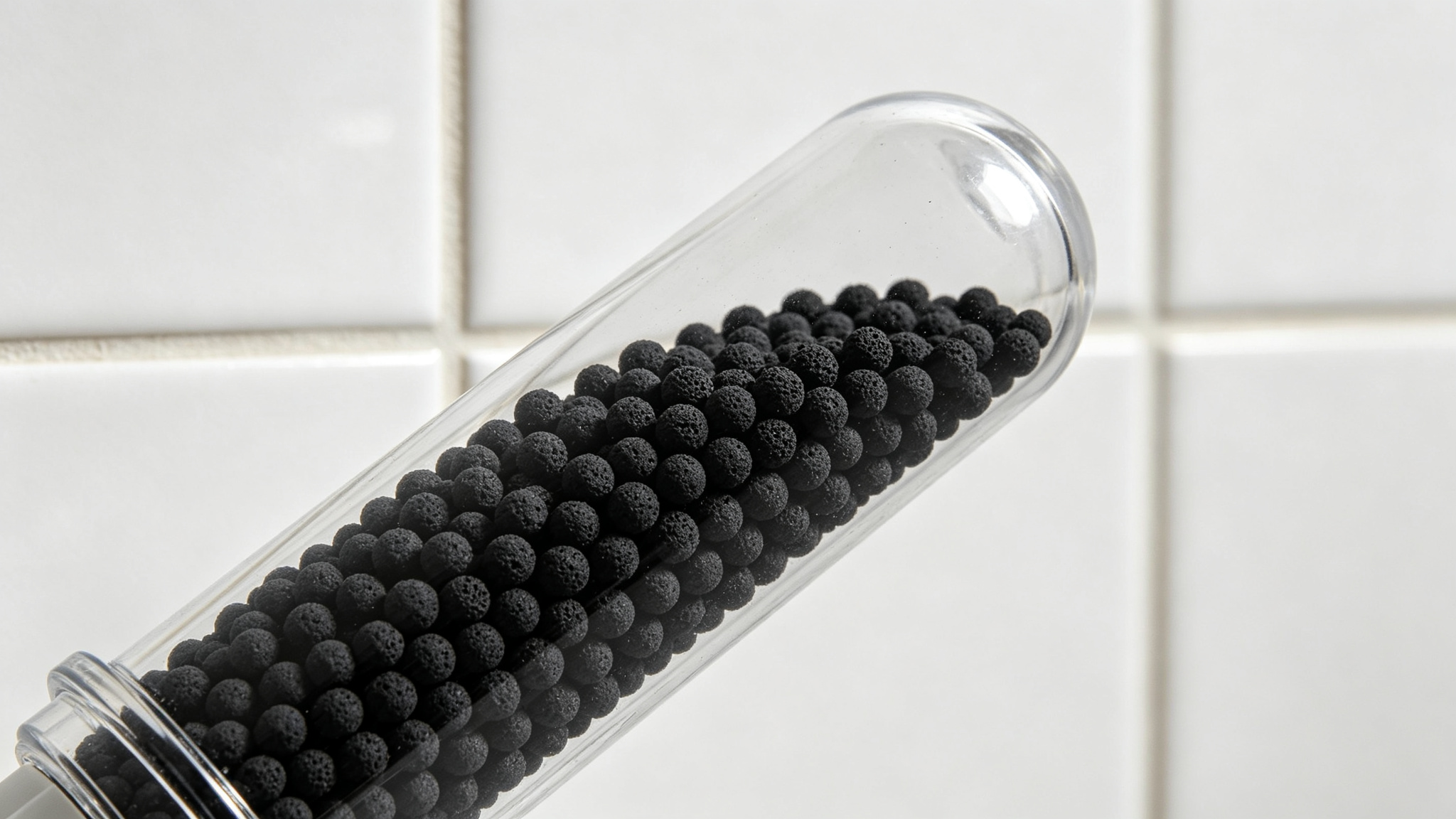
If you’ve shopped for shower filters, you’ve seen “activated carbon” on almost every product label. It’s the most common filter media in water filtration — from Brita pitchers to whole-house systems.
But does activated carbon actually work in a hot shower? That’s the question most product pages skip.
We’re Zooshen — we build shower filters with KDF-55 and activated carbon. What we’ll tell you is the honest version: where carbon works, where it weakens, and how to read product labels properly.
What Activated Carbon Actually Is
Activated carbon is charcoal that’s been processed (activated) to create millions of tiny pores. These pores give it an enormous surface area — a single gram can have 500–1,500 square meters of surface area.
When water flows through, contaminants adsorb (stick) to the carbon surface. It’s not a chemical reaction — it’s physical trapping. The contaminants sit on the pore surface until the carbon “fills up.”
That’s the key difference from KDF, which works through a chemical redox reaction.
The Problem: Hot Water Weakens Carbon
Here’s the part most shower filter product pages don’t tell you:
Activated carbon loses effectiveness as water temperature rises.
Carbon works through adsorption — physical sticking. Higher temperatures:
- Weaken the molecular forces holding contaminants to the carbon surface
- Make some adsorbed compounds release back into the water
- Speed up the “filling up” process
Shower water is 38–42°C (100–108°F). That’s significantly hotter than drinking water, and it’s the worst temperature range for carbon performance.
This is why the better shower filters lead with KDF-55 or calcium sulfite, not carbon alone. KDF’s redox chemistry keeps working hot.
When Carbon Still Helps
This doesn’t mean carbon is useless in shower filters. It still adds value in two ways:
- It catches sediment and odor compounds that KDF doesn’t handle — like some organic compounds that cause musty or earthy smells.
- It provides a polishing layer after KDF does the main chlorine reduction.
That’s why most good shower filters use a combination: KDF-55 + activated carbon, with KDF doing the heavy lifting in hot water.
What Carbon Does (And Doesn’t) Remove
Let’s be precise.
What activated carbon removes:
- Free chlorine — yes, but weaker in hot water
- Some organic compounds — taste and odor compounds
- Sediment particles — physical filtration
- Some VOCs — depending on contact time
What activated carbon does NOT remove:
- Hardness (calcium/magnesium) — no
- Chloramine — partial, and weakens in heat
- Fluoride — no
- PFAS — some specialty carbons do, but standard shower carbon doesn’t
- Lead or heavy metals — minimal
How to Read “Activated Carbon” on a Product Label
Here’s what to look for when you see “activated carbon” on a shower filter:
- Is it the primary media, or a polishing layer?
- Primary: “100% activated carbon” → weak in hot water
-
Combination: “KDF-55 + activated carbon” → better
-
What type of carbon?
- Coconut shell carbon — finer pores, good for taste/odor
- Bituminous coal carbon — larger pores, better for sediment
-
“Activated alumina” or “energy beads” — not real activated carbon
-
Is there NSF/ANSI 177 certification?
- If the product claims chlorine reduction, check whether it’s certified under NSF/ANSI 177.
- If it just says “activated carbon” without certification, it’s marketing.
Carbon vs. KDF vs. Vitamin C: Which Is Best?
Quick comparison for shower use:
| Media | Chlorine Reduction in Hot Water | Cost | Cartridge Life |
|---|---|---|---|
| KDF-55 | Excellent | Mid | 4–6 months |
| Activated carbon | Weakens in heat | Low | 2–4 months |
| Calcium sulfite | Good | Mid | 4–6 months |
| Vitamin C | Good | Mid | 3–4 months |
The honest takeaway: Carbon alone is not the best choice for a hot shower. A combination of KDF + carbon, or KDF alone, performs better.
Why Zooshen Uses KDF + Carbon
We’re a brand, so we’ll tell you why we chose a combination:
- KDF-55 does the heavy lifting — it keeps working at shower temperatures.
- Activated carbon adds polishing — it catches sediment and odor compounds.
- Together, they cover more ground than either media alone.
See the Zooshen shower filter collection for the full line.
Frequently Asked Questions
Does activated carbon work in hot shower water?
Partially. Activated carbon loses effectiveness above 38°C, and shower water is 38–42°C. It still adds polishing value, but it’s not the best primary media for hot water. KDF-55 performs better in heat.
What’s the best shower filter media?
For free chlorine in hot water: KDF-55. For chloramine: vitamin C. Carbon is best as a polishing layer, not the primary media.
Does activated carbon soften hard water?
No. Carbon doesn’t remove calcium or magnesium. Hardness stays. You need a water softener for that.
How often do I replace a carbon shower filter?
2–4 months, depending on water usage. In hot water, carbon depletes faster. Chlorine smell returning is the clearest signal.
Is “activated carbon” the same as “charcoal”?
Not exactly. Activated carbon is charcoal that’s been processed to create millions of tiny pores, which gives it enormous surface area for adsorption.
FAQ Schema: This block is structured for FAQPage schema. Mark with Yoast/RankMath.
The Bottom Line
Activated carbon is a great filter media — but it’s not ideal for hot shower water. It weakens above 38°C, and a shower is the hottest water in your house. The better choice is a KDF-55 + activated carbon combination, where KDF does the chlorine reduction and carbon adds polishing.
You can read more on the shower filter technology page, or browse the Zooshen shower filter collection.
About the Author
Zooshen Water Quality Team — Zooshen is a shower filter brand focused on KDF-55 media, NSF/ANSI 177 certification, and tool-free installation.
We’re a brand, not an independent review site. This guide represents our honest take on filtration chemistry.
Reviewed by — Senior Plumbing Advisor, licensed Master Plumber with 15+ years residential and commercial experience.
External references:
– NSF/ANSI 177: Shower Water Treatment Products
– EPA: Drinking Water Standards
– Complete Water Guide: Do Shower Filters Work?
Last updated: September 21, 2026.
Image Alt Text Cheat Sheet (For WordPress Upload)
| Image File | Alt Text (Copy-Paste) |
|---|---|
images/01-activated-carbon-hero.jpg |
Activated carbon in shower filters — black carbon beads in filter cartridge |