What Is KDF Media? (2026) The Honest Guide to Copper-Zinc Shower Filtration
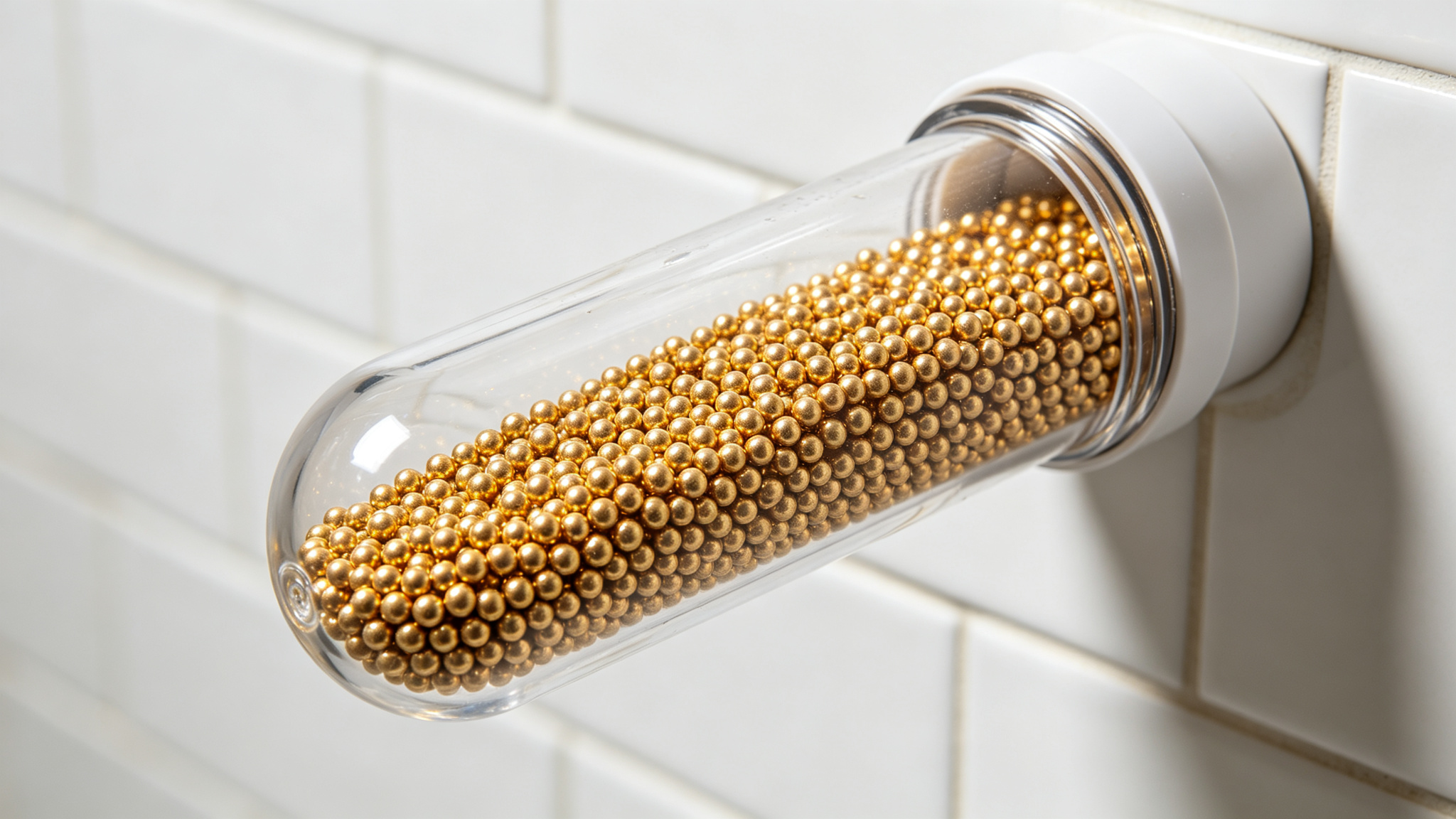
If you’ve researched shower filters, you’ve seen “KDF-55” on product labels. But what is KDF media, exactly? And does it actually work in a hot shower?
We’re Zooshen — we build shower filters around KDF-55, so we’re not pretending to be an independent review site. What we will do is explain the chemistry honestly: what KDF does, what it doesn’t do, and where the marketing claims end.
What Is KDF Media, Exactly?
KDF stands for Kinetic Degradation Fluxion. It’s a proprietary copper-zinc alloy media developed in the 1980s by KDF Fluid Treatment, Inc. The most common grade used in shower filters is KDF-55, which is roughly 55% copper and 45% zinc.
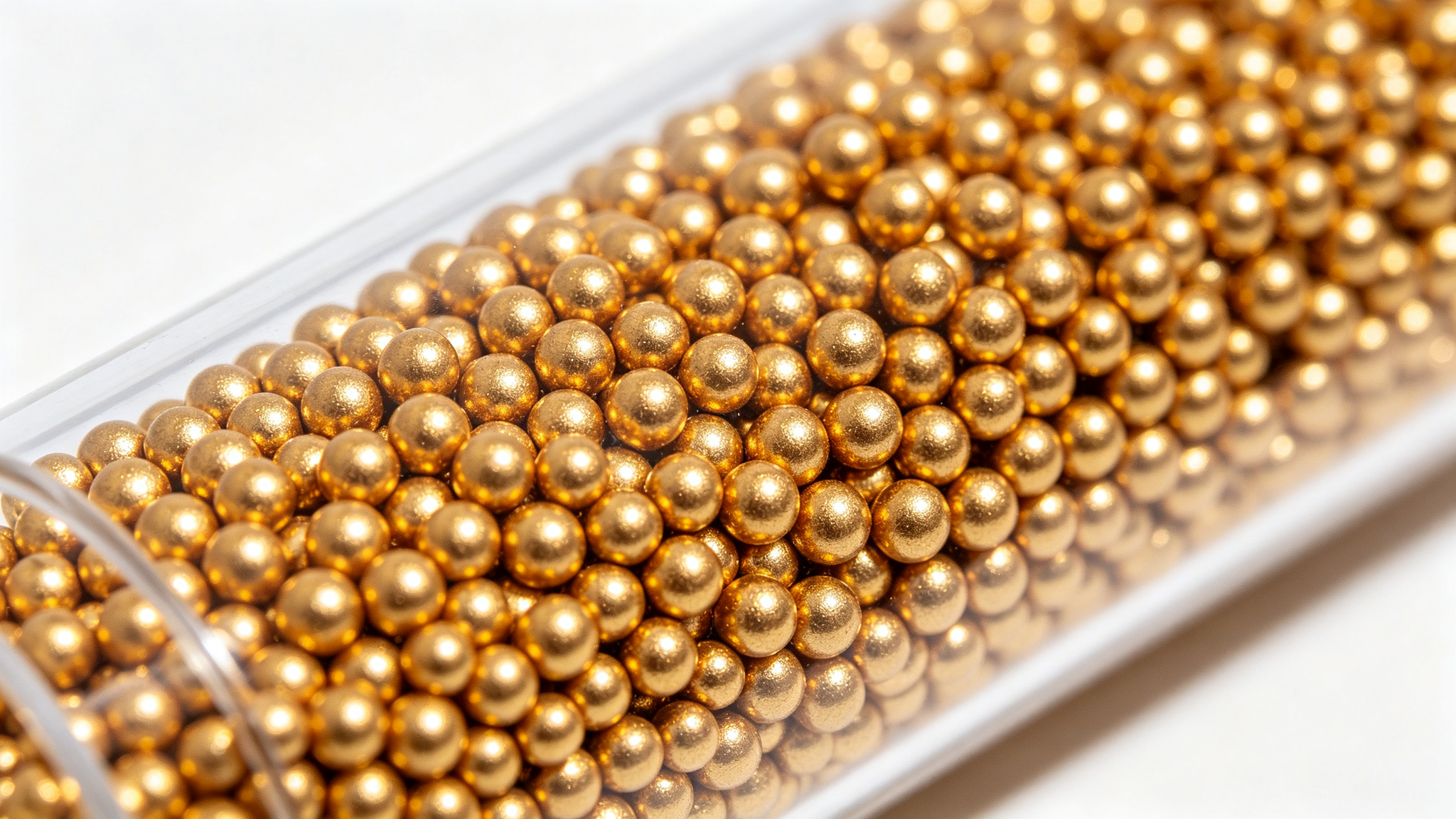
It comes as small granules or beads, usually mixed with other media inside a filter cartridge. When water flows through, the copper and zinc act as a small electrochemical cell — zinc corrodes sacrificially, releasing electrons that convert dissolved chlorine into harmless chloride.
That’s the short version. The chemistry matters because it explains what KDF does well and where it hits its limits.
How KDF Actually Removes Chlorine
Here’s the reaction:
- Zinc oxidizes (corrodes) — it loses electrons.
- Those electrons reduce dissolved chlorine (Cl₂ or HOCl) to chloride ions (Cl⁻), which are harmless and already present in your body naturally.
- Copper acts as a catalyst surface that speeds up the electron transfer.
This is called a redox reaction (reduction-oxidation). It’s the same chemistry that protects your car’s galvanized steel from rust.
Why this matters for shower filters: KDF works through a chemical reaction, not physical adsorption. That means:
- It keeps working in hot water (38–42°C / 100–108°F), where activated carbon loses effectiveness.
- It doesn’t simply “fill up” — it depletes as the zinc layer corrodes away.
- It needs sufficient contact time, which is why flow rate matters.
What KDF-55 Actually Does (And What It Doesn’t)
Let’s be precise. This is where marketing copy usually overreaches.
What KDF-55 does:
- Reduces free chlorine — the main job. Converts dissolved chlorine to chloride.
- Reduces some heavy metals — soluble lead, mercury, iron can partially precipitate out.
- Inhibits bacterial growth — copper ions have oligodynamic properties (they suppress algae and bacteria in the media bed).
- Works in hot water — unlike activated carbon, which weakens above 38°C.
What KDF-55 does NOT do:
- Does NOT soften water — it doesn’t remove calcium or magnesium. Hardness stays.
- Does NOT remove chloramine — chloramine (chlorine + ammonia) is much more stable and doesn’t break down through simple redox. You need vitamin C for that.
- Does NOT remove fluoride — fluoride is an ion, not a chlorine compound.
- Does NOT remove PFAS — KDF was never designed for that.
- Does NOT “purify” water — it’s a shower-point media, not a treatment plant.
Bottom line: KDF-55 is excellent at one specific job — reducing free chlorine in hot shower water. It’s not a universal filter media.
The Certification: NSF/ANSI 177
KDF-55 media is tested and certified under NSF/ANSI 177 — Shower Water Treatment Products. This standard specifically certifies chlorine reduction performance in shower applications.
Important caveat:
- NSF/ANSI 177 certifies chlorine reduction.
- It does not certify removal of lead, PFAS, or “20+ contaminants” the way some product pages claim.
- Every “99% removal” or “removes X contaminants” figure beyond chlorine comes from manufacturer testing, not independent certification.
See our NSF certified shower filters guide for how to read these labels properly.
KDF vs. Other Shower Filter Media
How does KDF compare to the other common media?
| Media | Removes Free Chlorine? | Works in Hot Water? | Removes Chloramine? | Softens Water? |
|---|---|---|---|---|
| KDF-55 (copper-zinc) | Yes | Excellent | No | No |
| Calcium sulfite | Yes | Good | Partial | No |
| Activated carbon | Yes (weakens in heat) | Poor | Partial | No |
| Vitamin C (ascorbic acid) | Yes | Good | Yes | No |
| Ceramic / “energy” beads | No established mechanism | N/A | No | No |
The honest takeaway: KDF-55 is one of the best media for free chlorine reduction in hot water. That’s why we build Zooshen filters around it.
How Long Does KDF Media Last?
KDF depletes as the zinc layer corrodes. Typical cartridge life:
- 4–6 months in chlorinated municipal water
- Longer if your chlorine level is low
- Shorter in hard water (sediment clogs the media bed faster)
The telltale signs your KDF cartridge is spent:
- Chlorine smell returns — the media can’t convert chlorine anymore.
- Flow rate drops — sediment builds up in the media bed.
- Pressure drop — you notice weaker shower spray.
See our when to replace a shower filter cartridge guide for the full diagnostic checklist.
Why Zooshen Uses KDF-55
We’re a brand, so we’ll tell you why we chose KDF-55 for our filters:
- It works in hot water — unlike activated carbon, which weakens at shower temperatures.
- It’s a verifiable specification — KDF-55 is a named, defined alloy. Not a “mystery multi-stage” filler.
- It’s certified under NSF/ANSI 177 — independent testing confirms chlorine reduction performance.
- Cartridges are replaceable and in stock — you’re not locked into a disposable unit.
See the Zooshen shower filter collection for the full line.
Frequently Asked Questions
What is KDF media made of?
KDF media is a copper-zinc alloy, typically 55% copper and 45% zinc (KDF-55 grade). It works through a redox reaction that converts dissolved chlorine to harmless chloride.
Does KDF-55 really work in hot shower water?
Yes. Unlike activated carbon, which loses effectiveness above 38°C, KDF’s redox chemistry keeps working at shower temperatures (38–42°C).
Does KDF remove chloramine?
No. Chloramine is much more stable than free chlorine. For chloramine, you need a vitamin C (ascorbic acid) filter.
Does KDF soften hard water?
No. KDF doesn’t remove calcium or magnesium. Hardness stays. If you need soft water, you need a water softener.
How long does KDF media last?
Typically 4–6 months in chlorinated municipal water. In hard water, replace sooner. Chlorine smell returning is the clearest signal the media is spent.
FAQ Schema: This block is structured for FAQPage schema. Mark with Yoast/RankMath.
The Bottom Line
KDF media is a specific, well-understood alloy that does one job well: reduces free chlorine in hot shower water. It’s not a universal filter, it doesn’t soften water, and it doesn’t remove chloramine. But for the most common shower filter use case — chlorinated municipal water — it’s one of the best media choices available.
You can read more on the shower filter technology page, or browse the Zooshen shower filter collection.
About the Author
Zooshen Water Quality Team — Zooshen is a shower filter brand focused on KDF-55 media, NSF/ANSI 177 certification, and tool-free installation.
We’re a brand, not an independent review site. This guide represents our honest take on KDF chemistry based on manufacturer technical data and NSF standards documentation.
Reviewed by — Senior Plumbing Advisor, licensed Master Plumber with 15+ years residential and commercial experience.
External references:
– NSF/ANSI 177: Shower Water Treatment Products
– EPA: Drinking Water Standards
– Complete Water Guide: Do Shower Filters Work?
Last updated: September 21, 2026.
Image Alt Text Cheat Sheet (For WordPress Upload)
| Image File | Alt Text (Copy-Paste) |
|---|---|
images/01-kdf-media-hero.jpg |
What is KDF media — shower filter cartridge with golden KDF-55 beads |
images/02-kdf-beads-closeup.jpg |
KDF media copper zinc beads close up in shower filter cartridge |